


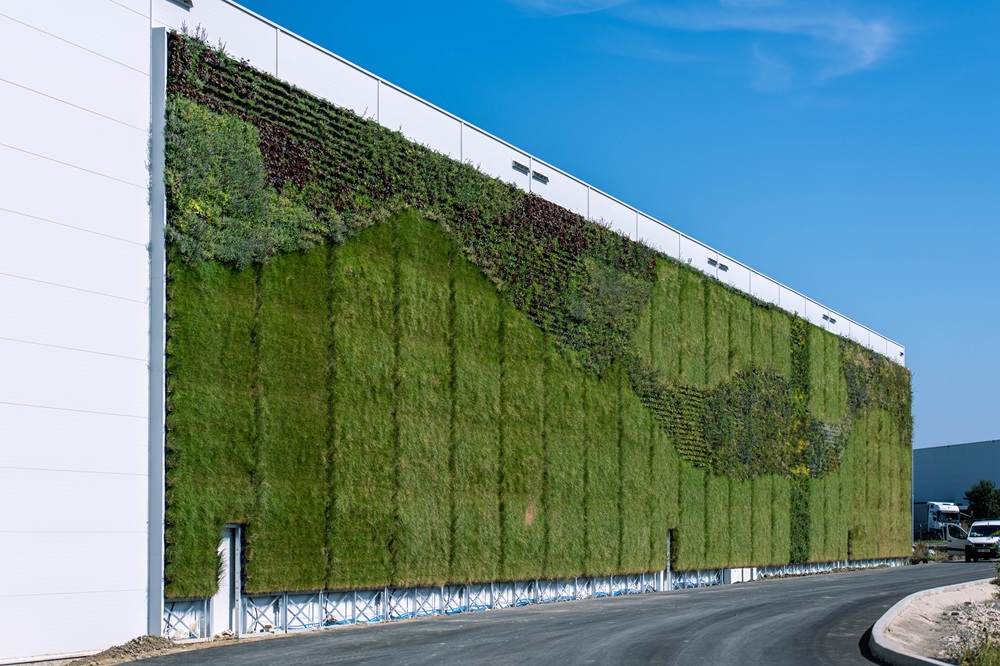
CTP has completed the installation of the largest continuous vertical garden in the Czech Republic at CTPark Prague North—part of a unique scientific research project being carried out in cooperation with the Czech University of Life Sciences (“CZU”) and Czech vertical garden specialists Němec.
Covering an area of around 1,300 sqm and comprising over 45,000 plants of various species meticulously selected by CZU scientists for research purposes, the facade at CTPark Prague North ranks among the largest of its kind in the world and is focused on reducing the heat load and mitigating heat islands created at industrial sites. Initial results show that the surface temperature of the newly installed green wall at CTPark Prague North can be up to 15°C lower during summer days compared to a conventional facade.

The project is part of scientific research conducted under the EU-funded OP TAK program to support Czech entrepreneurs, which awarded Němec a grant for their innovative vertical garden system. The result is a unique collaboration between the scientific community and two private companies to determine how plants can contribute to improving the microclimate at industrial parks. Němec’s patented Cascade Garden® system is expected to function as natural air conditioning, helping to regulate the temperature both inside and around the building.
"Our goal is not to create an aesthetic decoration for the building, but a functional living system. We are monitoring how different plant species react to changes in the weather. Additionally, we are interested in which species are able to survive in the long term without intensive care and how their vitality changes throughout the seasons. A crucial stage of research is coming now, when the plants will have to cope with frost and snow without help," explains Oldřich Vacek from the Department of Garden and Landscape Architecture at CZU, scientific guarantor of the project.
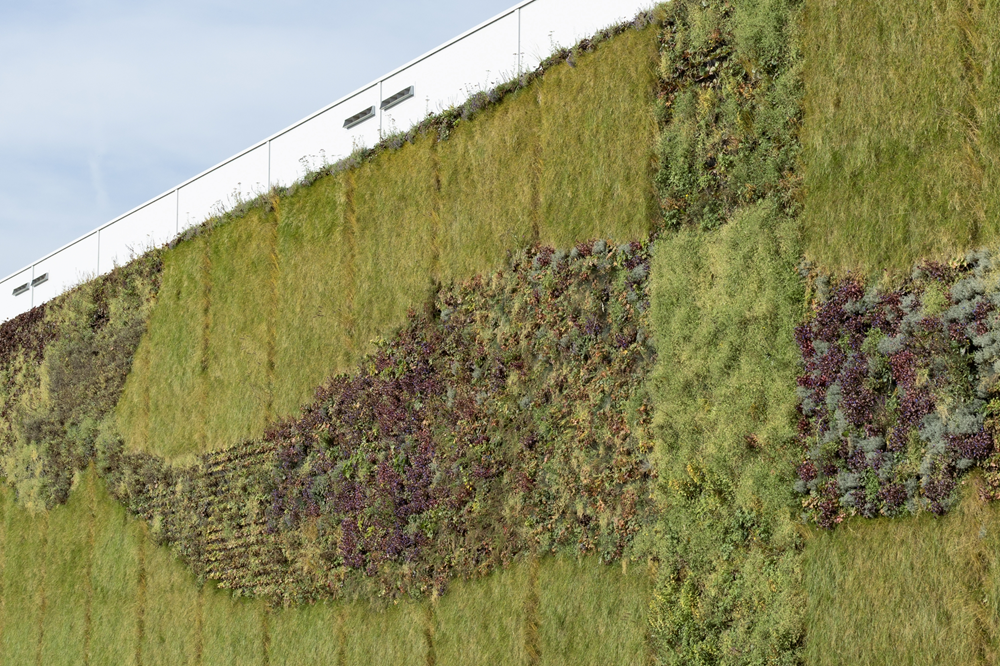
The facade is equipped with an irrigation system that minimises water consumption and ensures even irrigation. The scientific team from CZU is monitoring how the different plants cope with extreme conditions such as direct sunlight, drought, wind, and cold. The plants are not protected or treated in any way during the winter, which allows their natural resistance to be tested.
"We are very pleased that we have managed to create the continuous vertical garden in Czechia. This project was not only a technical challenge for us, but also an opportunity to show how natural solutions can work in an industrial environment. I believe that the successful implementation of this wall can serve as inspiration for the future construction of similar ecological solutions around the world," says Josef Němec, owner of Němec s.r.o.
"Vertical gardens are usually applied to office or public buildings in Czechia, but at CTP we believe that their potential can be much broader. This project is one of the first of its kind to test the functionality of a vertical garden on an industrial building in operation. Our goal is to find out whether similar solutions can not only improve the microclimate at our parks but also help reduce energy consumption and heat load. If this system proves to work, it could be a breakthrough that paves the way for the integration of vertical gardens as a standard part of industrial development, not only in our country, but also on a global scale," explains Jakub Kodr, Managing Director of CTP for the Czech Republic.
The research project will continue until the end of 2026. The results will be analysed and made available for wider use in the field of architecture and sustainability and serve as a basis for the further use of vertical gardens in industrial parks.