


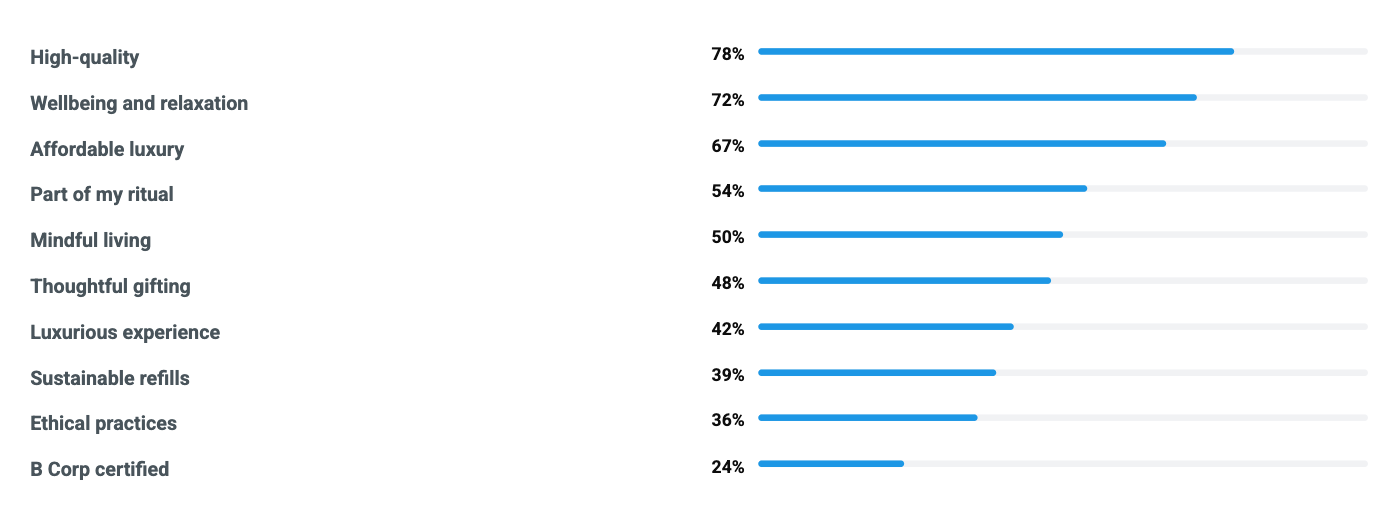
Only 39% of Dutch consumers say sustainable refill packaging matters when buying personal care products, and just 36% pay attention to ethical practices. What actually drives purchase decisions? High quality (78%), wellbeing and relaxation (72%), and affordable luxury (67%).
From niche to crowded
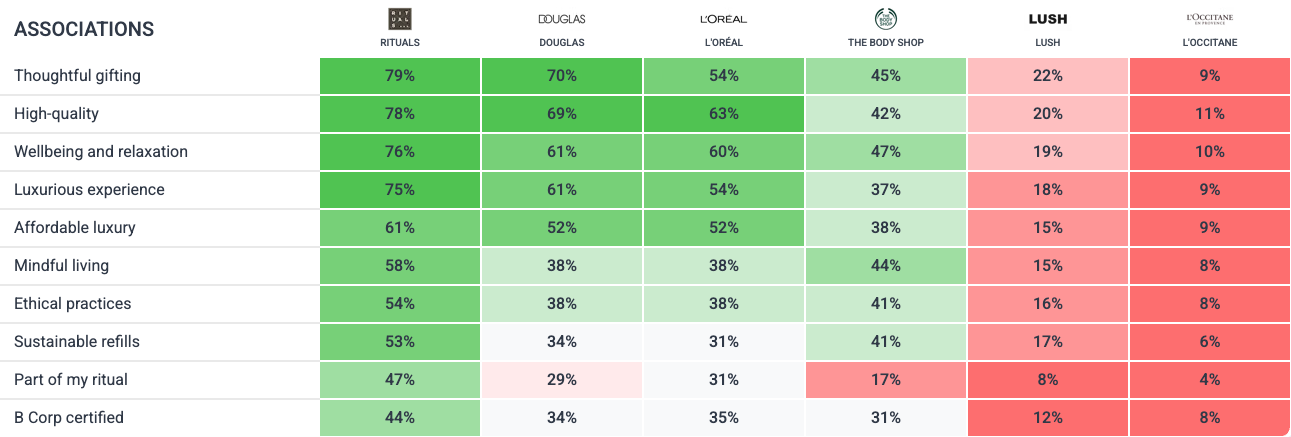
The research goes beyond asking consumers what they value — it also tracks which brands they spontaneously associate with specific needs. The picture that emerges is striking: the space for sustainability as a point of difference is largely taken. Rituals dominates, with an association of 53–54% with sustainability themes, followed by The Body Shop. For newer or smaller brands, competing on this ground has become a losing battle.
"Sustainability worked brilliantly as a niche strategy," says Jiri Boudal, CEO of Behavio. "The Body Shop built an entire brand on it decades ago, when the major players weren't paying attention. But that window has closed. The real question now is: where are the gaps?"
Who owns the sustainability message?
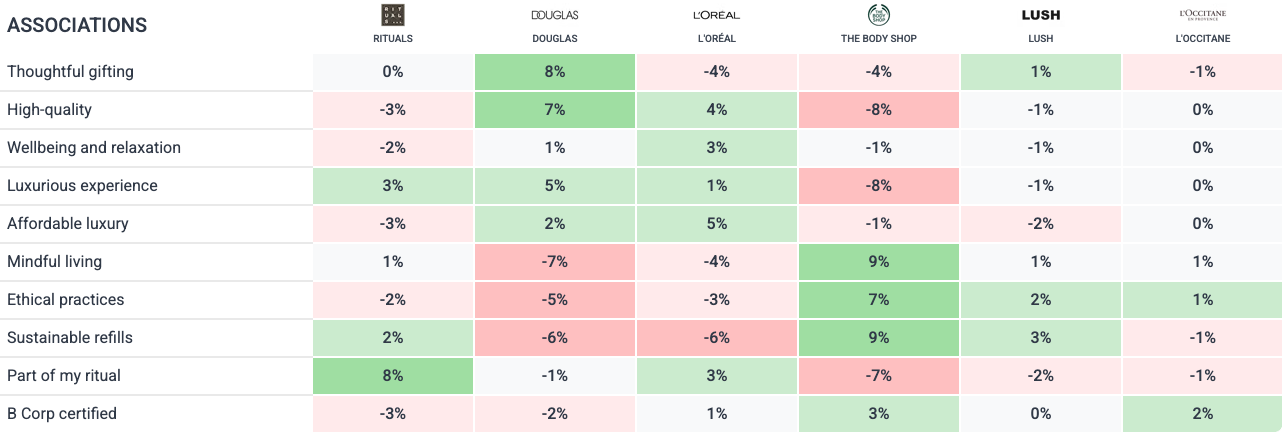
While Rituals tops the absolute rankings on sustainability, that's largely a function of its overall brand size. When you adjust for brand awareness, The Body Shop comes out on top: +9% on sustainable refills and +7% on ethical practices. Consumers connect this brand with sustainability far more strongly than its market position alone would predict.
Source: Behavio
Lush tells a more complicated story. Despite making environmental credentials central to its identity, the brand scores just +3% on sustainable refills and +2% on ethical practices — modest numbers for a brand that leans into this messaging so hard. The message clearly lands with a loyal core audience, but it isn't breaking through to mainstream consumers.
What should brands do with this?
The implications differ depending on where a brand sits in the market. Smaller brands are better off stepping away from sustainability as a primary positioning — the ceiling is too low, and the competition too entrenched. Mid-sized brands should be looking for more important, less contested consumer needs. L'Oréal's "affordable luxury" positioning is a good example of finding that kind of open space. Larger brands shouldn't abandon sustainability altogether, but it should sit in the background rather than lead the conversation — serving as a defensive asset that prevents brand erosion rather than a growth driver.
"The real opportunity in beauty isn't sustainability — it's whether consumers see you as a brand that delivers quality and contributes to their wellbeing," says Boudal. "Those are the needs that matter to more than three-quarters of the market."
You can access the full research report 👉here.
About the research
The study was conducted in November 2025 among 1,000 respondents representative of the Dutch online population.
About Behavio
Behavio is a market research agency specializing in AI-driven behavioral research for marketing. The company measures actual consumer behavior rather than purchase intent, using a methodology grounded in neuroscience and the psychology of unconscious decision-making. Behavio works with brands that want to understand what truly moves people.